Biological Age vs Chronological Age: How a Blood Test Measures How Old You Really Are
Biological age estimates how fast your body is ageing from blood biomarkers — and predicts disease and death better than your birthday does. Here's how it works.

Two 45-year-olds walk into a clinic. One has the blood chemistry, inflammation profile and physical capacity of a healthy 35-year-old; the other looks 55 on the inside. They share a birth year and almost nothing else that matters for how long, and how well, they'll live. That gap is what biological age measures — and it's now one of the most actionable numbers in preventive medicine.
What is the difference between biological age and chronological age?
Chronological age is simply the number of years since you were born; biological age is an estimate of how old your body is functioning, derived from measurable biology rather than the calendar. Your chronological age ticks up at exactly one year per year for everyone. Biological age does not — it reflects the cumulative wear on your cells, organs and systems, which depends on genetics, environment and decades of lifestyle. It's the more honest predictor of when age-related disease shows up.
The practical difference: chronological age tells an insurer how to price a policy. Biological age tells you whether the choices you're making are ageing you faster or slower than the calendar — while there's still time to change course.
How is biological age measured from a blood test?
Biological age is estimated by feeding a panel of blood biomarkers into a validated algorithm that was trained to predict mortality and disease, then expressing the result as an age in years. The most established blood-based clock, PhenoAge, was built by Morgan Levine and colleagues from nine routine clinical markers plus chronological age.
Those nine markers span several body systems — albumin and alkaline phosphatase (liver), (kidney), (metabolic), (inflammation), lymphocyte percentage and white-cell count (immune), and mean corpuscular volume and red-cell distribution width (blood). The pattern across all nine produces a composite that predicts 10-year survival better than chronological age alone.
Blood-biomarker clocks vs epigenetic clocks
There are two main families of ageing clock, and they're often confused. Blood-biomarker clocks (like PhenoAge's clinical version) use standard blood-chemistry results you can get from any lab. Epigenetic clocks read DNA methylation — chemical tags on your DNA — and include newer mortality-trained models such as GrimAge.
Epigenetic clocks are powerful: in a large US cohort, each one-standard-deviation increase in GrimAge acceleration was associated with a roughly 31% higher risk of death. But they require specialised methylation assays, cost more, and aren't yet standard care. Routine blood-biomarker clocks are cheaper, repeatable, and use markers your clinician already acts on — which is why Orba builds its biological-age estimate from the blood panel.
Why does biological age predict health better than chronological age?
Because biological age is built directly from the biology that drives disease, while chronological age is just a proxy for it. Two people the same age can sit a decade apart biologically, and it's the biological number that tracks who gets sick first.
Physical-capacity markers tell the same story. In the Prospective Urban Rural Epidemiology (PURE) study of nearly 140,000 adults across 17 countries, grip strength was a stronger predictor of all-cause and cardiovascular death than systolic blood pressure — every 5 kg drop in grip strength carried a 16% higher risk of dying from any cause. Strength is, in effect, a readout of biological age you can measure with a $30 dynamometer.
“Grip strength is a simple, inexpensive risk-stratifying method for all-cause death, cardiovascular death, and cardiovascular disease.”
— Leong et al., PURE study, The Lancet (2015)
Can you actually lower your biological age?
Yes — unlike your chronological age, biological-age markers respond to behaviour, and several can move in months rather than years. You can't subtract birthdays, but you can change the inputs the clocks read: inflammation, glucose control, lipid particles, body composition and strength.
The levers with the strongest evidence are unglamorous and familiar: resistance training to build the strength that PURE links to survival; aerobic fitness to raise VO₂ max; nutrition that flattens glucose and lowers inflammatory markers; sleep; and not smoking. The point of testing isn't a one-off number — it's a baseline you re-measure, so you can see whether what you're doing is actually moving the markers in the right direction.
- Build strength and muscle: resistance training drives grip strength and lean mass — the capacity markers most tightly linked to longevity.
- Improve cardiorespiratory fitness: VO₂ max is one of the strongest modifiable predictors of all-cause mortality.
- Lower inflammation and glucose: nutrition, weight and sleep changes move hs-CRP, and — all inputs to ageing clocks.
- Re-test on a cadence so you can see the markers move, not just guess.
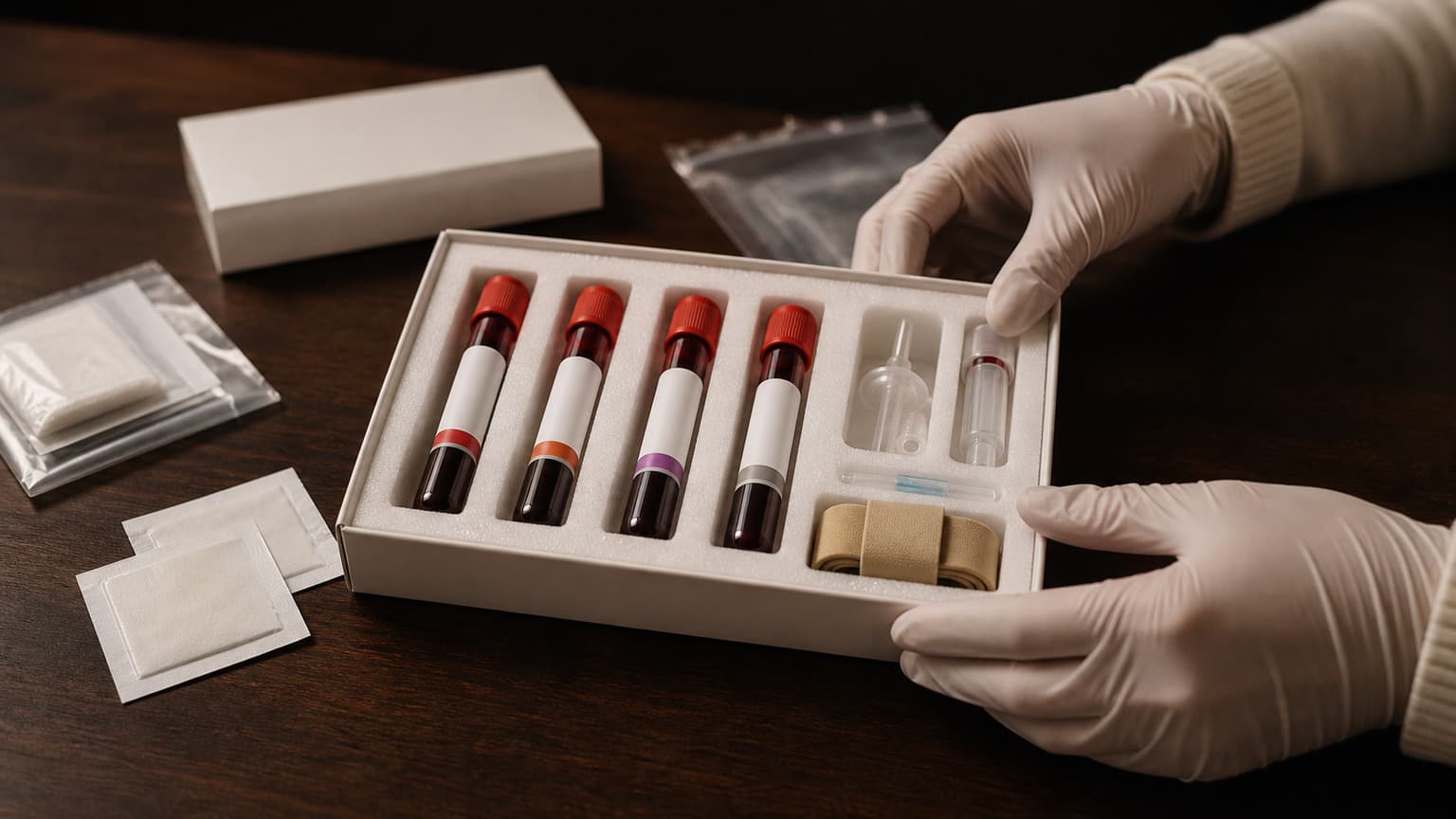
Orba estimates your biological age from a single at-home blood draw, benchmarks each marker against optimal ranges, and re-tests over the year so you can watch the number move.
See your biological age →How accurate is a biological age test?
A biological-age estimate is a validated statistical prediction, not a precise odometer reading — it's most useful as a trend you track over time and a flag for which systems need attention. The underlying clocks are validated against hard outcomes (death, cancer, physical decline) in large cohorts, which is what makes them meaningful.
The right way to read your result is directional. A biological age well above your chronological age is a prompt to look at the markers driving it; a number trending down across re-tests is evidence your plan is working. The single most valuable thing you can do is establish a baseline now and measure the slope — one reading in isolation tells you far less than three over a year.
Key takeaways
- Chronological age counts birthdays; biological age estimates how old your body is actually functioning, from blood biomarkers validated against disease and death.
- Blood-based clocks like PhenoAge use nine routine markers plus age and predict mortality and healthspan better than chronological age alone.
- Physical capacity is part of biological age: every 5 kg drop in grip strength carried a 16% higher mortality risk in a 140,000-person study.
- Biological age is modifiable — strength, fitness, lower inflammation and better glucose control can move the markers in months.
- Read your result as a trend you re-test over time, not a single precise number.
Frequently asked questions
Biological age is an estimate of how old your body is functioning, calculated from measurable biology — typically blood biomarkers or DNA methylation — rather than the number of years since you were born. It predicts age-related disease and death more accurately than chronological age.
28 years in performance coaching
Dan Remon is the founder of Orba Health and, since 2002, of Aspire Coaching — 28 years coaching executives and athletes through their own health data. He built Orba around a simple rule his medical team argued over for a year: every marker on a panel has to change what you'd do next, or it doesn't belong. He writes about cutting the noise out of blood work and choosing tests that actually move a decision.
View full profileKeep reading
 Blood Testing
How to Choose a Blood Panel in Bangkok (2026)
Dan's guide to which markers earn their slot, which ones don't change anything, and the questions every clinic should answer.
 Blood Testing
At-Home Blood Testing in Bangkok: The Complete Guide
A phlebotomist comes to you, the panel covers the markers that change decisions, and a doctor reads the results. Here's the complete guide to at-home blood testing in Bangkok.
 Metabolic Health
Metabolic Health Explained: The Markers That Predict
Metabolic health is how well your body manages energy — and most adults are quietly losing it. Here are the blood markers that flag it years before a diagnosis.