The body, measured like blood.
Eleven tests across capacity, strength, composition and movement, re-run every quarter.
- tests, four domains
- 11tests, four domains
- the best-evidenced physical predictor
- VO₂the best-evidenced physical predictor
- re-measured rather than once
- Quarterlyre-measured rather than once
- 1-Day Diagnostic
- 3-Day Experience
- 30-Day Journey
- Annual membership
Same method at every depth. What changes is how long we stay with it.
Eleven tests, across four domains.
Count them against whatever your last physical assessment covered. Each one is here because it predicts something about the next twenty years, and each is re-run every quarter.
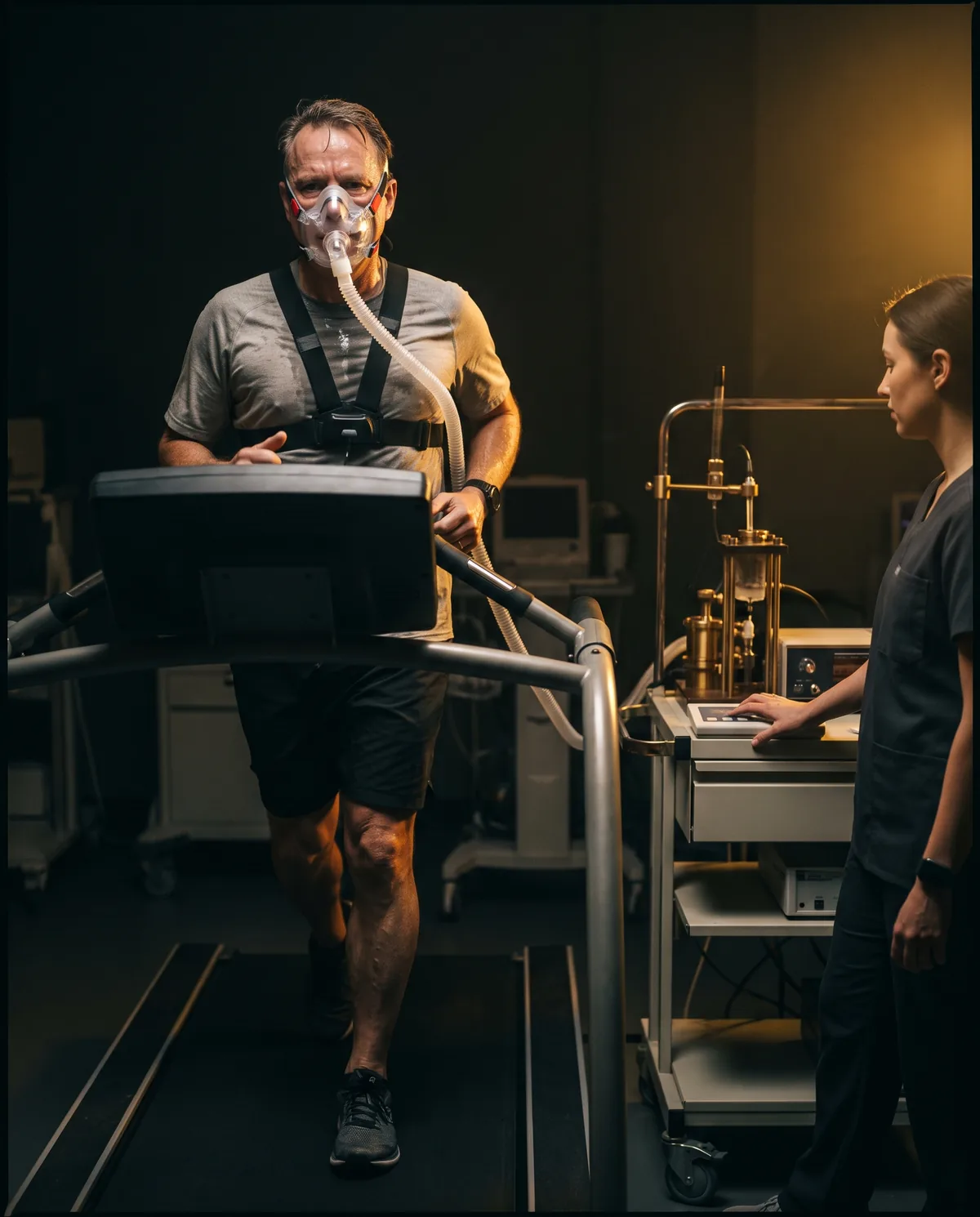
Cardiorespiratory capacity
VO₂ max
Graded exercise test to volitional exhaustion, gas exchangeCardiorespiratory fitness is among the best-evidenced predictors of all-cause mortality. Pooled across 33 studies of healthy adults, low fitness carried a relative risk of 1.70 against high fitness, and the gradient held across the whole measured range.[1][2]
Ventilatory thresholds
The two breakpoints inside the same testWhere your aerobic base ends and where you tip into unsustainable work, the two numbers that decide how your training week is actually written.
Heart rate recovery
Fall in heart rate in the first minute after peakAutonomic function. A fall of 12 beats per minute or less in the first minute predicted death at twice the rate, after adjusting for the workload reached, so it is not simply restating your fitness.[3]

Strength and power
Grip strength
Hand dynamometry, both sidesA proxy for whole-body strength. Pooled across roughly two million adults, higher grip strength carried a hazard ratio of 0.69 for death from any cause. It is also one of the few tests where the left-right difference is itself informative.[4]
Sit-to-stand
Five-repetition and thirty-second protocolsLower-limb power, and the practical ability to get off a chair unaided. It is scored against your own previous result rather than a published cut-off.
Gait speed
Timed walk over a fixed distanceSometimes called the sixth vital sign. Pooled across nine cohorts of older adults, survival rose with gait speed across the full range, at a hazard ratio of 0.88 for every 0.1 m/s.[5][6]
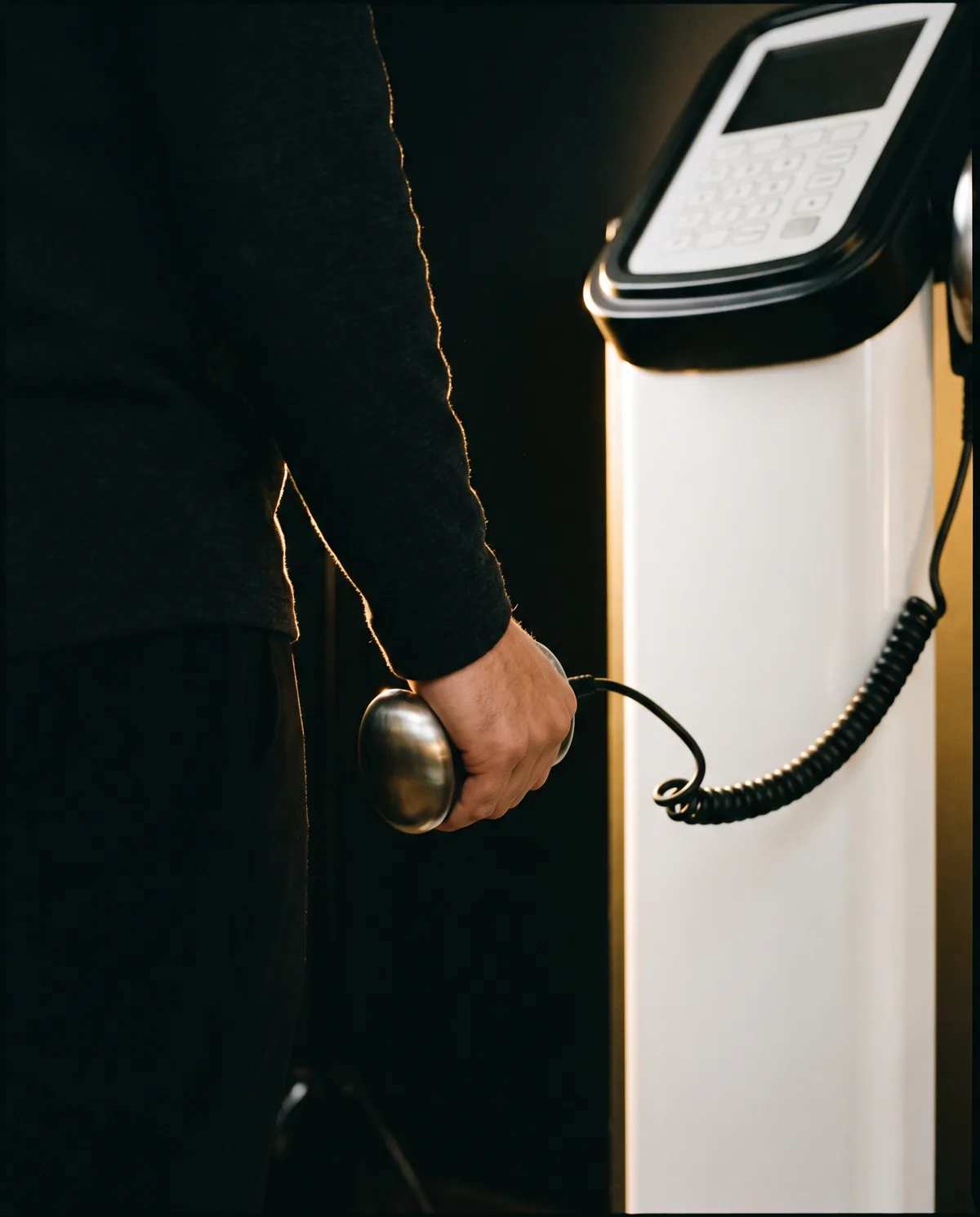
Composition and structure
Body composition
Segmental bioelectrical impedanceLean mass, fat mass and where each sits. Two people at the same weight can have very different amounts of each, which a scale cannot show you.
Anthropometry
Circumferences, skinfolds, segment lengthsDistribution rather than total: visceral pattern, limb asymmetry, and the measurements a scan alone will not give you.
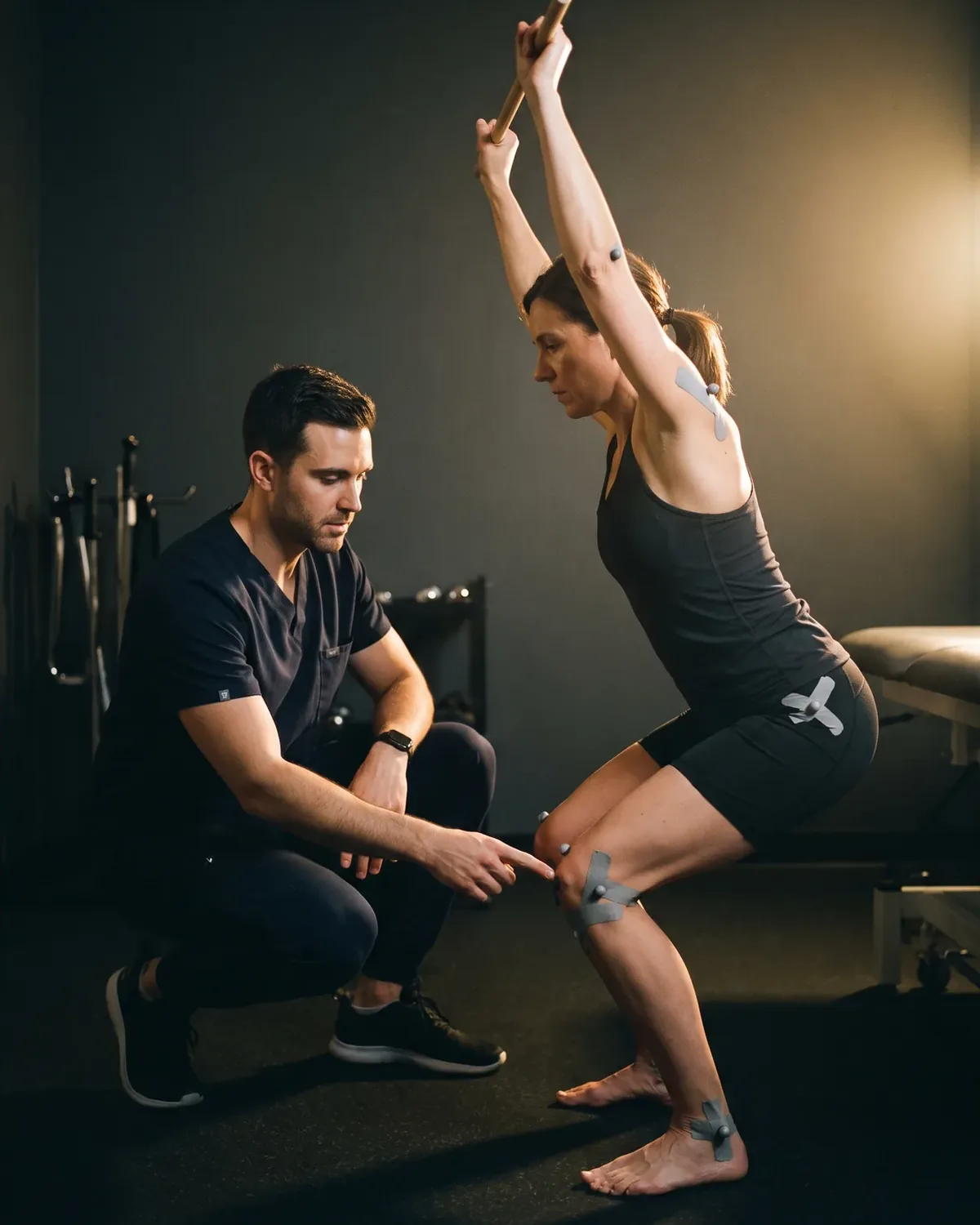
Movement and control
Posture assessment
Static and loaded, photographed and scoredHow you stand and load under your own weight, recorded so a change over the years is visible rather than remembered.
Muscle imbalance
Left-right and agonist-antagonist comparisonWhere force is not shared evenly between sides or between opposing muscle groups. It stays invisible until both sides are measured.
Movement screen
Loaded and unloaded patterns, range and controlWhether you can get into the positions your training asks for. The programme is written from what this finds.
One functional score, and what it is not
The eleven results combine into a single functional longevity score across four domains, tracked every quarter so the direction is visible rather than remembered. It is a composite we build from tests that individually carry published predictive evidence: cardiorespiratory fitness, grip strength and gait speed each associate with all-cause mortality in large pooled analyses. The composite itself is ours. It is not a validated published instrument, and we will always say which of the two you are looking at.[1][4][6]
No normative targets are published here on purpose. A grip figure or a VO₂ number means nothing without your age, your sex and your own previous result, and a page that prints one is handing out medical advice to somebody it has never assessed.
About the tests.
Preparation, timing, and which ones you actually need.
References
- 1.Kodama, S., et al. (2009). Cardiorespiratory fitness as a quantitative predictor of all-cause mortality and cardiovascular events in healthy men and women: a meta-analysis. JAMA. PMID:19454641
- 2.Mandsager, K., et al. (2018). Association of cardiorespiratory fitness with long-term mortality among adults undergoing exercise treadmill testing. JAMA Network Open. PMID:30646252
- 3.Cole, C. R., et al. (1999). Heart-rate recovery immediately after exercise as a predictor of mortality. New England Journal of Medicine. PMID:10536127
- 4.García-Hermoso, A., et al. (2018). Muscular strength as a predictor of all-cause mortality in an apparently healthy population: a systematic review and meta-analysis of data from approximately 2 million men and women. Archives of Physical Medicine and Rehabilitation. PMID:29425700
- 5.Fritz, S., & Lusardi, M. (2009). White paper: "walking speed: the sixth vital sign". Journal of Geriatric Physical Therapy. PMID:20039582
- 6.Studenski, S., et al. (2011). Gait speed and survival in older adults. JAMA. PMID:21205966
The method only works from a measurement.
Everything above starts at the same place: one visit that maps where you actually are. What follows is decided by what that visit finds.
Bangkok · in person or virtual · we reply within one business day